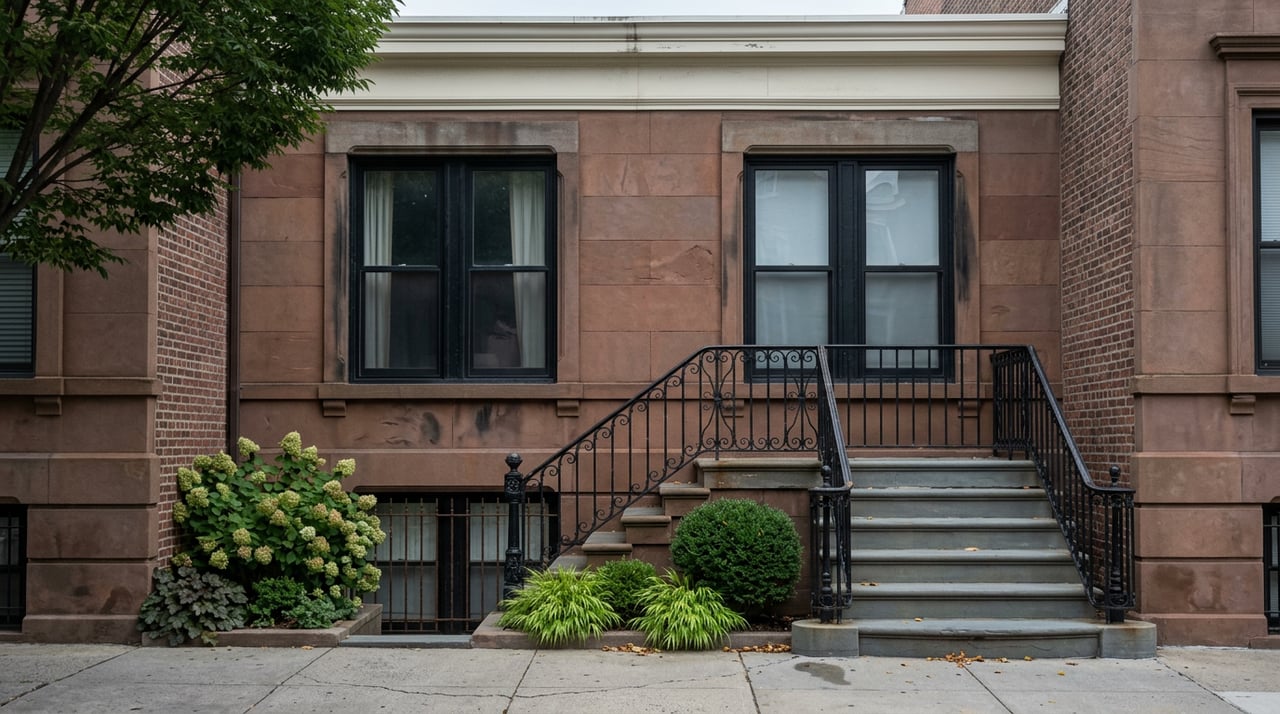
A seller in a Brooklyn historic district gets three contractor bids for a new front door and a round of window repairs before listing photos go up. The bids come back fine. Then one contractor mentions, almost in passing, that the work needs a landmarks filing before anyone can touch the frame. Now the seller is doing math on a closing date that felt solid a week ago.
That scene plays out across brownstone Brooklyn every season, and it feeds a belief that landmark status is a blanket tax on selling a home there. It isn't. Most sales in a designated historic district close without the Landmarks Preservation Commission entering the conversation at all. The ones that stall almost always share the same root cause: someone tried to change what the block can see, right around the time they were also trying to change who owns the house.
The map got bigger in November
If you're selling in Flatbush, this isn't hypothetical anymore. The Landmarks Preservation Commission designated two new historic districts in November 2025: Beverley Square West and Ditmas Park West, both south of Prospect Park. Beverley Square West covers 118 houses built between 1894 and 1910 across three blocks, largely the work of Brooklyn architects John J. Petit, John B. Slee, and Benjamin Driesler. Ditmas Park West adds 127 houses built mostly between 1902 and 1910, most of them designed by Arlington D. Isham. Together they bring the number of historic districts in that stretch of Victorian Flatbush to five.
If you bought a house on one of those blocks before November, you didn't apply for landmark status and nobody asked your permission. It arrived. Anyone planning a sale there in the next year should check their address against the LPC's district map before pricing exterior work, because the rules that applied to your house last year may not be the rules that apply now.
Brooklyn Heights sellers have had six decades to get used to this. The Brooklyn Heights Historic District was the very first historic district the LPC designated anywhere in New York City, back on November 23, 1965, covering the blocks along Montague, Pierrepont, Remsen, Columbia Heights, Willow, Hicks, Joralemon, Orange, Pineapple, and Clark Streets. Park Slope's district followed in 1973, then grew twice more, in 2012 and again in 2016, until it protected roughly 2,850 buildings, among the largest historic districts in Brooklyn. The pattern in Flatbush now is the same pattern that played out in those neighborhoods decades ago. New designations keep happening, and each one resets the clock for owners who weren't paying attention.
Three tracks, one confusing name
The phrase "landmarks approval" gets used as if it's one process. It isn't. The LPC sorts exterior work into three tracks, and which track your project lands on determines whether it adds two weeks to your timeline or six months.
| Permit type | What it covers | Typical timeline |
|---|---|---|
| Permit for Minor Work | Exterior changes that don't need a DOB permit but still affect the building's look: window or door replacement in existing openings, masonry cleaning, restoring architectural details in kind | Often decided within about 10 business days once complete; the agency is required to rule within 20 |
| Certificate of No Effect | Work that does need a DOB permit but doesn't touch protected features: interior renovations, plumbing and heating equipment, rooftop mechanical units, ramps | Commonly runs close to two months given typical staff backlog |
| Certificate of Appropriateness | Major visible changes: additions, demolitions, rooftop construction, removing a stoop or cornice, redesigning the facade | A full public hearing cycle, generally 3 to 6 months, on top of 4 to 12 weeks of filing prep |
Look at what actually falls into the fast lane. The projects most sellers reach for right before listing, a repainted door, restored millwork, windows swapped in their existing openings, are exactly the items the Permit for Minor Work track was built to handle quickly. The slow lane is reserved for work that changes the building's outline against the sky: a rooftop addition, a rear extension that alters the block's massing, a stoop removed rather than repaired. Most sellers preparing a house for market aren't doing that kind of project anyway. The ones who get caught are usually mid-renovation when the sale decision arrives, holding a half-finished addition that still needs commission sign-off.
The rule that can add six months to your rooftop addition is the same rule that stopped the house next door from building something that would have hurt your comps.
That trade is worth sitting with, because it explains why landmark status shows up in resale value at all. A designated district limits what any single owner can do to the exterior, which means it also limits what your neighbor can do. Buyers are paying, in part, for the assurance that the block they're looking at won't be unrecognizable in five years.
What the paperwork actually costs
Budget for this before you budget for the door hardware. LPC filing preparation alone typically runs $2,000 to $8,000 and adds 4 to 12 weeks before exterior work can start, separate from the construction schedule itself. A full facade restoration, repointing, patching, or masonry replacement, generally lands between $30,000 and $80,000 depending on condition, with straightforward repointing priced around $10 to $25 per square foot. Because landmarked work requires historically accurate materials like custom wood windows and matched masonry, expect the finished job to run 15 to 25 percent above what the same scope would cost on a non-landmarked house.
None of this means skip the work. It means sequence it. A seller who wants a facade refresh before listing photos needs to know, before signing a contractor, whether the scope fits a Permit for Minor Work or triggers a full hearing, because that answer determines whether the work finishes before the open house or after the closing.
What the current market is actually rewarding
Landmarked Brooklyn isn't behaving like the rest of the borough right now, and the gap is informative. Across Brooklyn in the first quarter of 2026, signed contracts fell 14 percent year over year, closings dropped 8 percent, active listings rose 12 percent, and homes averaged 87 days on market, a market loosening in the ordinary sense. Park Slope and Gowanus moved in the opposite direction over the same stretch: one first-quarter brokerage report put active listings in those two neighborhoods down 22 percent to just 78, tighter supply even as the wider borough eased.
Park Slope's own numbers, over the three months ending April 2026, show a market still rewarding well-prepared listings: a median sale price of $1,749,350, an average of 49 days on market, a sale-to-list ratio of exactly 100 percent, and 5.7 percent of homes selling above asking, against 25.1 percent that took a price cut somewhere along the way. Townhouses specifically, 11 of them on the market at a median list price of $2.25 million, moved faster still, averaging 34 days and drawing two offers apiece. Citywide data through April 2026 put Brooklyn's overall sale-to-list ratio at 98.6 percent, with close to one in five homes closing above ask.
Brooklyn Heights headline sales tell a similar story about staying power. 1 Sidney Place closed around $22.1 million in 2025. The borough's record brownstone sale remains 8 Montague Terrace at $25.5 million back in 2020. More recent trades on Pierrepont Street, Remsen Street, and Willow Place landed in the $10 million to $12.5 million range across 2024 and 2025. These are the ceiling, not the median, but they show a district that has carried its landmark restrictions for sixty years without those restrictions capping value.
A pre-listing sequence that avoids the surprise
- Check the LPC's online map for your exact address before pricing any exterior work, especially if you're in Flatbush and haven't looked since before November 2025.
- Before hiring a contractor, ask which of the three permit types the scope falls under. A window swap and a rooftop deck are not the same conversation with the commission.
- If the work you want falls into Certificate of Appropriateness territory, decide honestly whether it's worth doing before you list, or whether it's better priced into the listing and left to the next owner.
- Keep copies of any prior LPC approvals and your Certificate of Occupancy in your closing file. Buyers' attorneys ask for them, and having them ready shortens due diligence.
- Separately, remember that New York has required a completed Property Condition Disclosure Statement for one-to-four-family home sales since March 2024, when the old option to hand a buyer a $500 credit instead was eliminated. A brownstone is a one-to-four-family home. This isn't paperwork landmark status lets you skip.
Frequently asked questions
Does landmark status mean I can't renovate my brownstone? No. It regulates what changes to the exterior, not whether you're allowed to update the house. Interior renovations generally don't need LPC review at all unless they require a DOB permit or touch a protected exterior feature.
How do I find out if my block just became landmarked? Check your address on the LPC's public map before finalizing any exterior plans. This matters most right now for owners in the Flatbush blocks that became Beverley Square West and Ditmas Park West in November 2025, since those designations are recent enough that a title search from a year ago wouldn't have caught them.
Will landmark status scare off buyers? The data doesn't suggest that. Brooklyn Heights and Park Slope, two of the borough's oldest and largest historic districts, are also home to some of its strongest recent sale prices and tightest inventory. Buyers appear to be paying for the certainty that landmark protection provides, not discounting for it.
If you're weighing a sale in a Brooklyn historic district and want a clear read on what your specific block, and your specific renovation plans, mean for timeline and price, Marty Vandenburg and the Elevated Experience Team can walk through it with you. Get your free home valuation and find out where your property actually stands before you make a single call to a contractor.