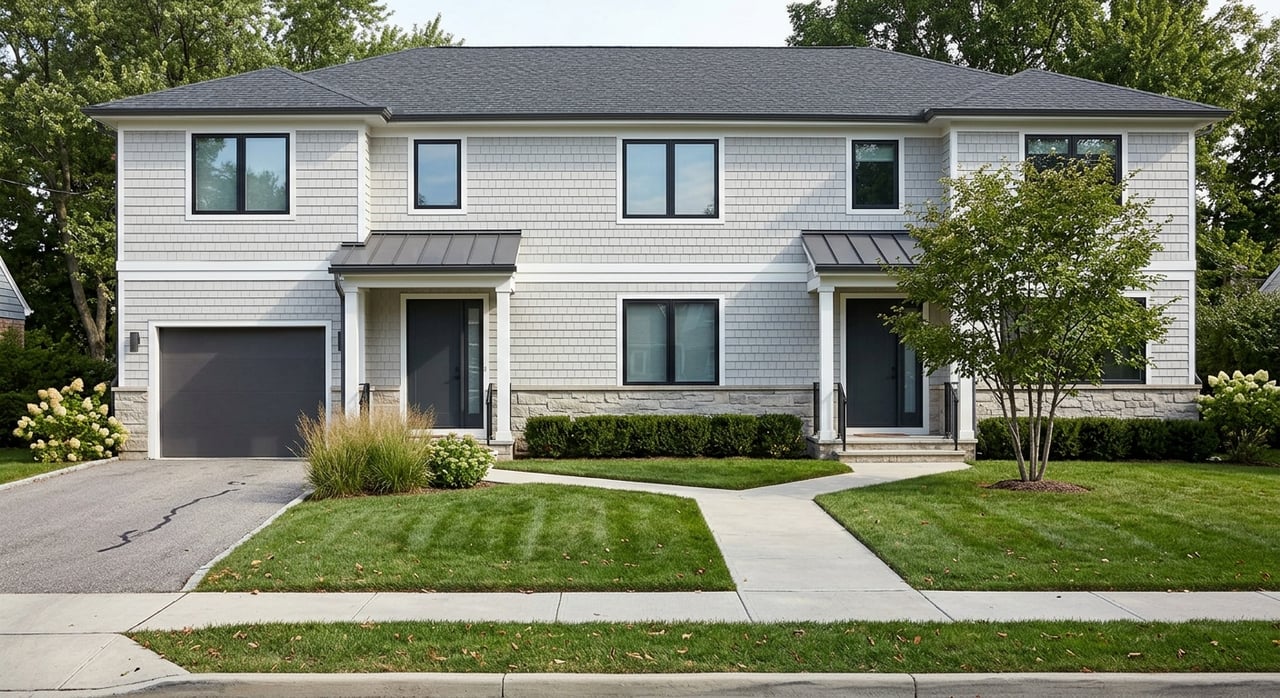
Wondering whether a duplex in Suffolk County can actually work as a rental investment? That is the right question to ask. In a market where home values, rents, and monthly carrying costs all run high, a duplex can be a smart play, but only if the numbers hold up under real scrutiny. This guide will help you size up Suffolk County duplexes with a clearer eye on rents, taxes, financing, and the buyer pool so you can make more confident decisions. Let’s dive in.
Why Suffolk County duplexes draw attention
Suffolk County offers the kind of market conditions that naturally get investors and owner-occupant buyers interested in duplexes. According to the U.S. Census QuickFacts for Suffolk County, the county has 1,546,090 residents, a median household income of $130,686, median gross rent of $2,255, and a median owner-occupied home value of $578,400.
Those figures tell an important story. Rents are strong, but ownership costs are high too. The same Census data shows median monthly owner costs with a mortgage at $3,320, which means your underwriting needs to show that rental income meaningfully helps offset the payment.
Start with rents, then get more local
Countywide rent figures are useful, but they are only a baseline. Suffolk County is a large market, and rent levels can vary enough from town to town that using one average number can distort your projections.
In the Census QuickFacts results reviewed here, median gross rent ranges from $1,974 in Riverhead to $2,363 in Southampton. Brookhaven comes in at $2,314, Huntington at $2,358, Islip at $2,209, and Smithtown at $2,233, based on town-level Census data.
That spread matters. A duplex in one part of Suffolk County may support a very different cash flow picture than a similar property in another town. The takeaway is simple: do not underwrite off the county average alone. Immediate town and neighborhood rent comps matter more.
Use HUD rent benchmarks carefully
Another helpful reference point is HUD’s FY2026 Fair Market Rent schedule for the Nassau-Suffolk HMFA. It lists rents of $1,992 for a studio, $2,379 for a one-bedroom, $2,747 for a two-bedroom, $3,563 for a three-bedroom, and $3,768 for a four-bedroom.
These numbers can help you pressure-test your assumptions, especially when you are evaluating unit mix. But HUD defines fair market rents as 40th-percentile gross rents used for housing programs, so they are benchmarks, not substitutes for live local comps on duplex units.
Watch vacancy as part of the bigger picture
For regional context, HUD’s first-quarter 2025 Long Island market report describes apartment market conditions as balanced, with a 4.6% vacancy rate and an average rent of $2,938. That report applies to apartment properties with five or more units, so it is not a direct duplex comp set.
Still, it offers a useful market backdrop. It suggests you should not assume zero vacancy or unlimited rent growth just because Long Island rents are high. Conservative planning usually wins in this type of market.
The real deal is in the underwriting
A duplex can look strong on a gross-rent basis and still fall apart once you account for the real expenses. In Suffolk County, this is where many buyers either sharpen their strategy or get surprised.
The biggest swing factor is often property taxes. According to Suffolk County, each town sets its own property tax rate, assessments are handled by the towns and sometimes villages, and each parcel has its own tax map number.
That means you should model the actual tax bill for the specific property, not a county average or rough estimate. Two duplexes with similar asking prices can carry very different tax burdens depending on location and assessment history.
Reserves and vacancy can change the numbers fast
Lender rules also affect how solid the deal looks on paper. Fannie Mae’s minimum reserve requirements call for six months of reserves for a two- to four-unit principal residence transaction and for an investment-property transaction.
That requirement matters because it affects how much cash you need beyond your down payment and closing costs. A property can be financeable in theory, but still strain your liquidity if you do not prepare for reserves.
FHA rules are another reason to stay conservative. FHA’s three- to four-unit self-sufficiency test uses net rental income, and that calculation subtracts the greater of the appraiser’s vacancy and maintenance estimate or 25% of fair market rent. While that test applies to three- and four-unit properties, the larger lesson is relevant for duplex buyers too: gross rent is not the same as usable income.
Owner-occupant duplex buyers have options
One reason duplexes stay appealing is that they can attract more than one type of buyer. You may be looking at the property as an investor, but a future buyer could be an owner-occupant who wants rental income to help cover housing costs.
That broader buyer pool can support resale appeal. It also gives you more flexibility if you are buying your first multi-unit property and plan to live in one unit.
FHA can be an entry point
HUD’s current program guide shows that FHA financing can apply to one- to four-unit properties, with a minimum 3.5% cash investment for purchase transactions. For many buyers, that makes FHA a practical path into duplex ownership.
If you plan to occupy one unit, this can be especially attractive. It may allow you to enter the market with less cash down than a traditional investment property loan would require.
Conventional financing can work too
Fannie Mae also allows rental income from a borrower-occupied two- to four-unit principal residence. In those cases, lenders generally use Form 1025 to support income from the subject property.
This matters because it expands your financing options. In practical terms, a Suffolk County duplex may appeal to both house hackers and more traditional investors, which can make these properties more versatile than they first appear.
Duplexes are different from 5+ unit buildings
If you are comparing a duplex to a small apartment building, the financing difference is a big dividing line. Once a property moves to five or more units, it generally shifts out of the residential two- to four-unit category and into multifamily lending.
Fannie Mae’s multifamily financing resources reflect that separation. For you, the practical takeaway is that a duplex usually has a broader buyer pool and more familiar residential financing paths than a five-plus-unit property.
That can matter both on the way in and on the way out. Easier financing access often supports demand from a wider set of future buyers.
A simple Suffolk County duplex checklist
Before you move forward on a duplex, make sure you can answer these questions with real numbers:
- What are the current rents for closely comparable units in the immediate area?
- How do those rents compare with HUD fair market rent benchmarks?
- What is the exact property tax bill for this parcel?
- What do your financing terms look like under FHA or conventional options?
- How much will you need in post-closing reserves?
- What vacancy and maintenance assumptions are you using?
- If you occupy one unit, how much of your monthly payment will the second unit realistically offset?
- If you rent both units, does the projected income still work after conservative deductions?
What a smart duplex buy usually looks like
In Suffolk County, the strongest duplex opportunities are rarely the ones that look best from a headline number alone. They are the ones where local rents are verified, taxes are confirmed, financing is understood, and reserve planning is realistic.
That is especially important in a county where both values and carrying costs run high. A duplex can be a solid long-term hold or an effective owner-occupant strategy, but only if the property works at the parcel level, not just in a market summary.
If you are weighing duplex options in Suffolk County and want help sorting through the local numbers, financing angles, and resale considerations, Marty Vandenburg can help you evaluate properties with a practical, market-savvy approach.
FAQs
What makes Suffolk County duplexes different from other rental investments?
- Suffolk County duplexes sit in a high-cost market where rents can help offset ownership costs, but taxes, reserves, and local rent differences can change the math quickly.
What rent data should you use for a Suffolk County duplex analysis?
- Start with county and HUD benchmarks for context, but rely more heavily on immediate town and neighborhood rent comps because rents vary meaningfully across Suffolk County.
What financing options are available for a Suffolk County duplex?
- Depending on your situation, you may be able to use FHA for an owner-occupied one- to four-unit purchase or conventional financing that allows rental income from a borrower-occupied two- to four-unit property.
Why are Suffolk County property taxes so important for duplex underwriting?
- Property taxes are set locally and can vary sharply by town and parcel, so using the actual tax bill is much more accurate than using a broad average.
How should you think about vacancy for a Suffolk County duplex?
- You should use a conservative vacancy and maintenance assumption rather than relying on full rent collection every month, since lender rules and real-world operations both reduce net income.
Is a duplex easier to finance than a five-unit property in Suffolk County?
- In many cases, yes, because duplexes fall within the residential two- to four-unit category, while five-plus-unit properties typically shift into multifamily financing.